
How to Add a Shared Work Calendar to an iPhone
If you need to add work calendar to iPhone so that your team’s shared schedule shows up alongside your personal one, this guide walks you through it step by step. The process uses Microsoft Exchange — the same account type that powers most business email and calendars in Office 365 and Microsoft 365.
Before you start
- You will need the email address and password for the shared calendar account (not your personal one — ask your IT team if you are unsure which credentials to use).
- Make sure your iPhone is running a reasonably recent version of iOS. If Settings looks very different to what is described below, update iOS first via Settings > General > Software Update.
- You do not need to be on the office Wi-Fi to do this.
Steps to add work calendar to iPhone
- Open Settings on your iPhone.
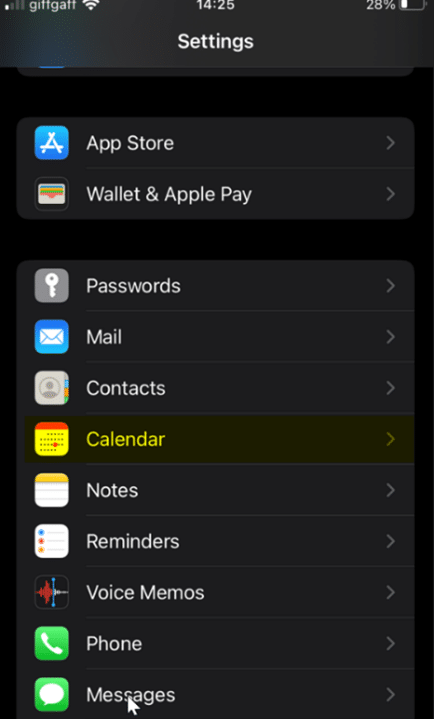
- Scroll down and tap Calendar.
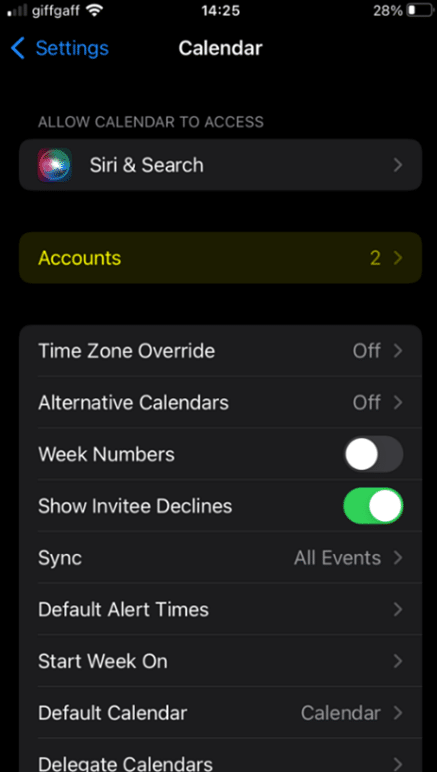
- Tap Accounts.
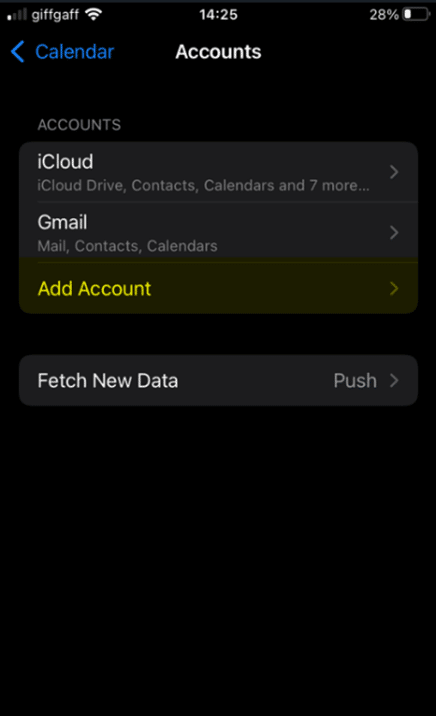
- Tap Add Account.
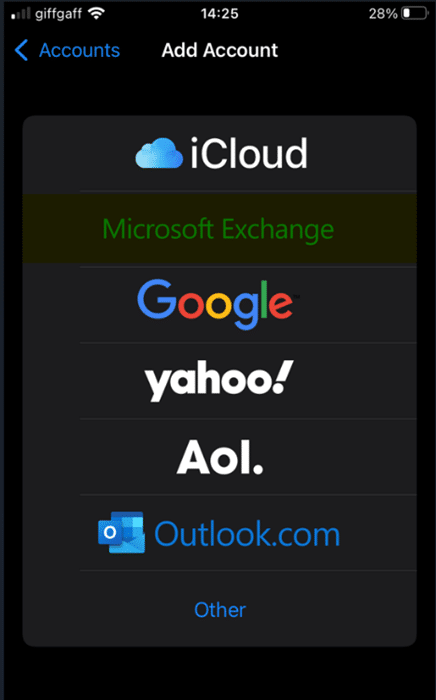
- Select Microsoft Exchange from the list of account types.
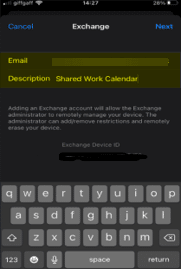
- Enter the email address for the shared calendar account. In the Description field, type something recognisable — for example, Shared Work Calendar. Tap Next.
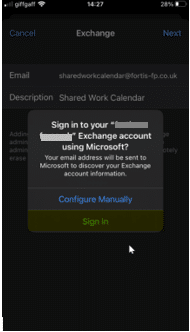
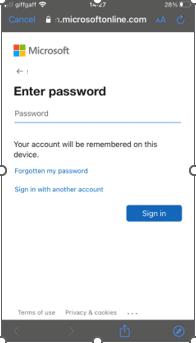
- Tap Sign In when prompted, then enter the password for that account.
- Once signed in, you will see a list of items that can sync — Mail, Contacts, Calendars, Reminders, and Notes. Turn everything off except Calendars. Tap Save.
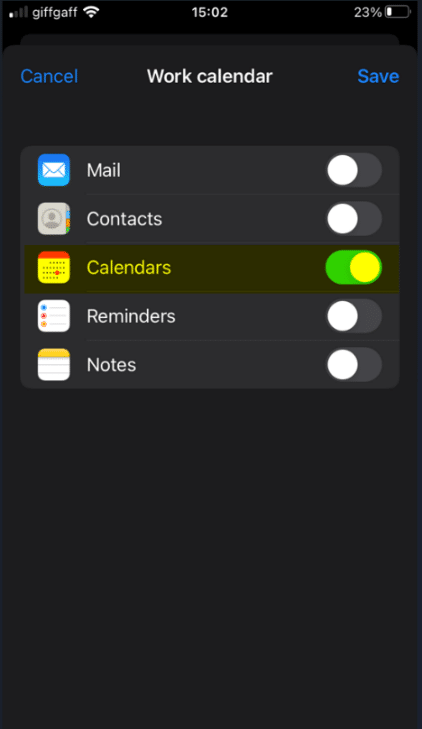
The shared calendar will now appear in your iPhone’s Calendar app. It may take a minute or two to pull in existing events. That is it — you have managed to add work calendar to iPhone without touching a laptop.
If that didn’t work
- Wrong credentials — the most common cause of failure. Double-check with your IT team that the email address and password belong to the shared calendar account, not your personal mailbox.
- Multi-factor authentication (MFA) — if your organisation uses MFA (a second approval step, usually a text or app notification), you may need an app password instead of your regular one. Ask your IT administrator to generate one for you.
- Account already exists — if Exchange is already set up on your phone for personal email, iOS may block a second Exchange account depending on your organisation’s settings. Your IT team can check whether a device policy is preventing it.
For further reading on account types supported by Apple devices, see the Apple Support website.
Also useful
If you need to do the same thing on a desktop, these guides cover the Outlook side of things:
When to ask us
If the same steps are failing for several people at once, or you are seeing an error message that mentions encryption, device compliance, or a policy block, that points to something on the server or your mobile device management (MDM) setup — not the phone itself. Computer Care customers can raise a support ticket and we will take it from there.